
3 more
Maki-e gold-lacquered box shaped like a biwa
- Lacquer



Description
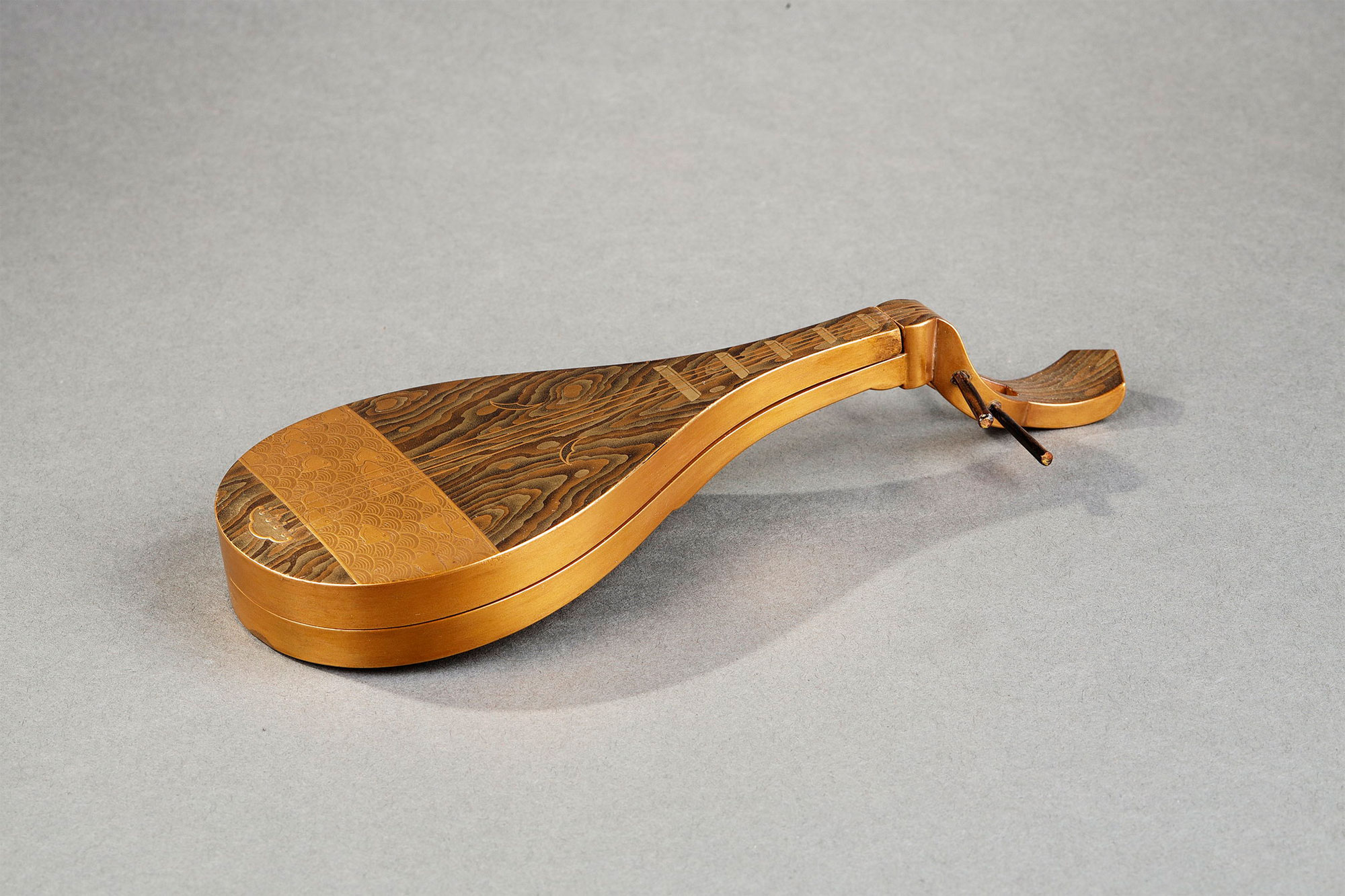
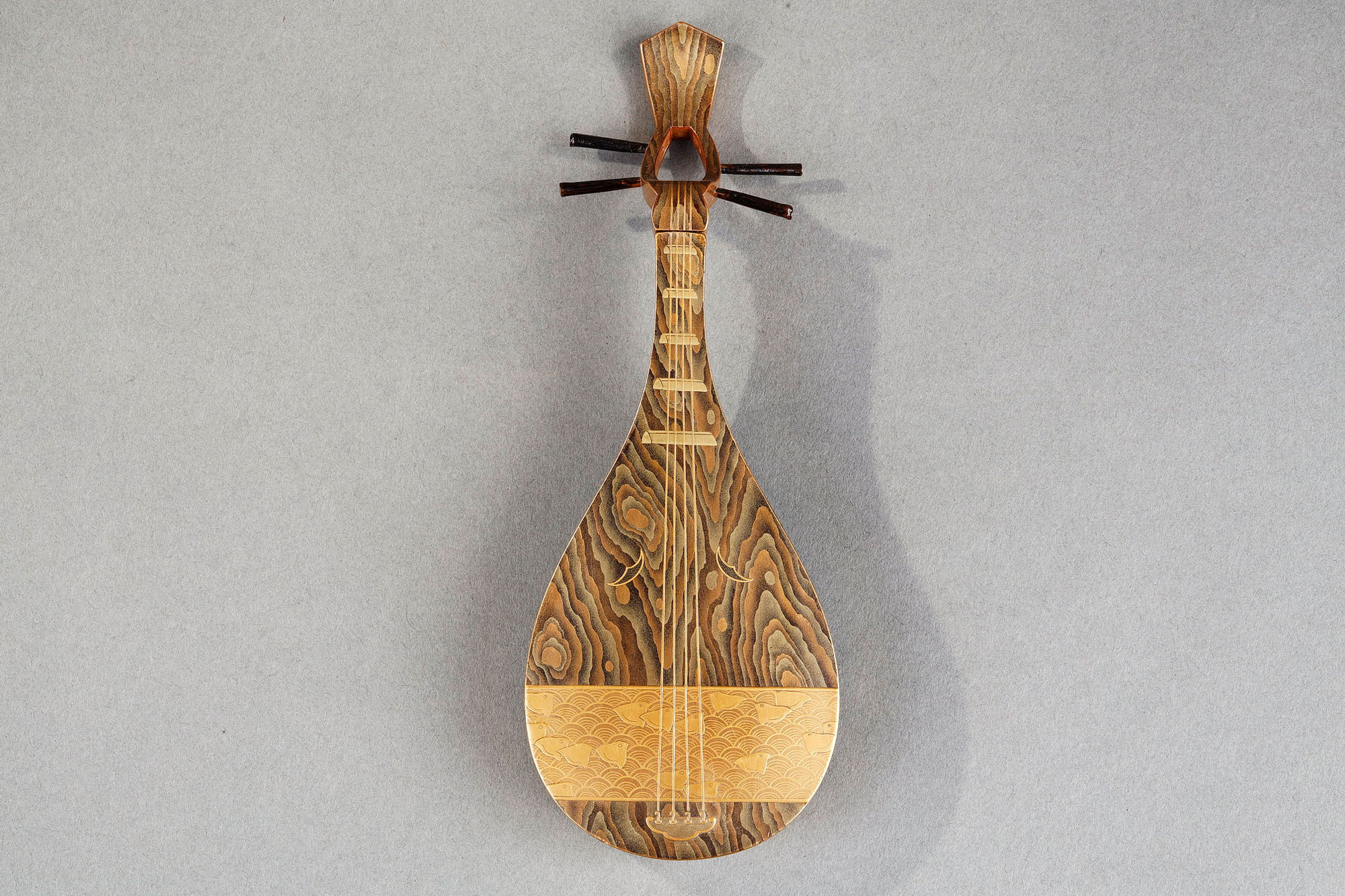
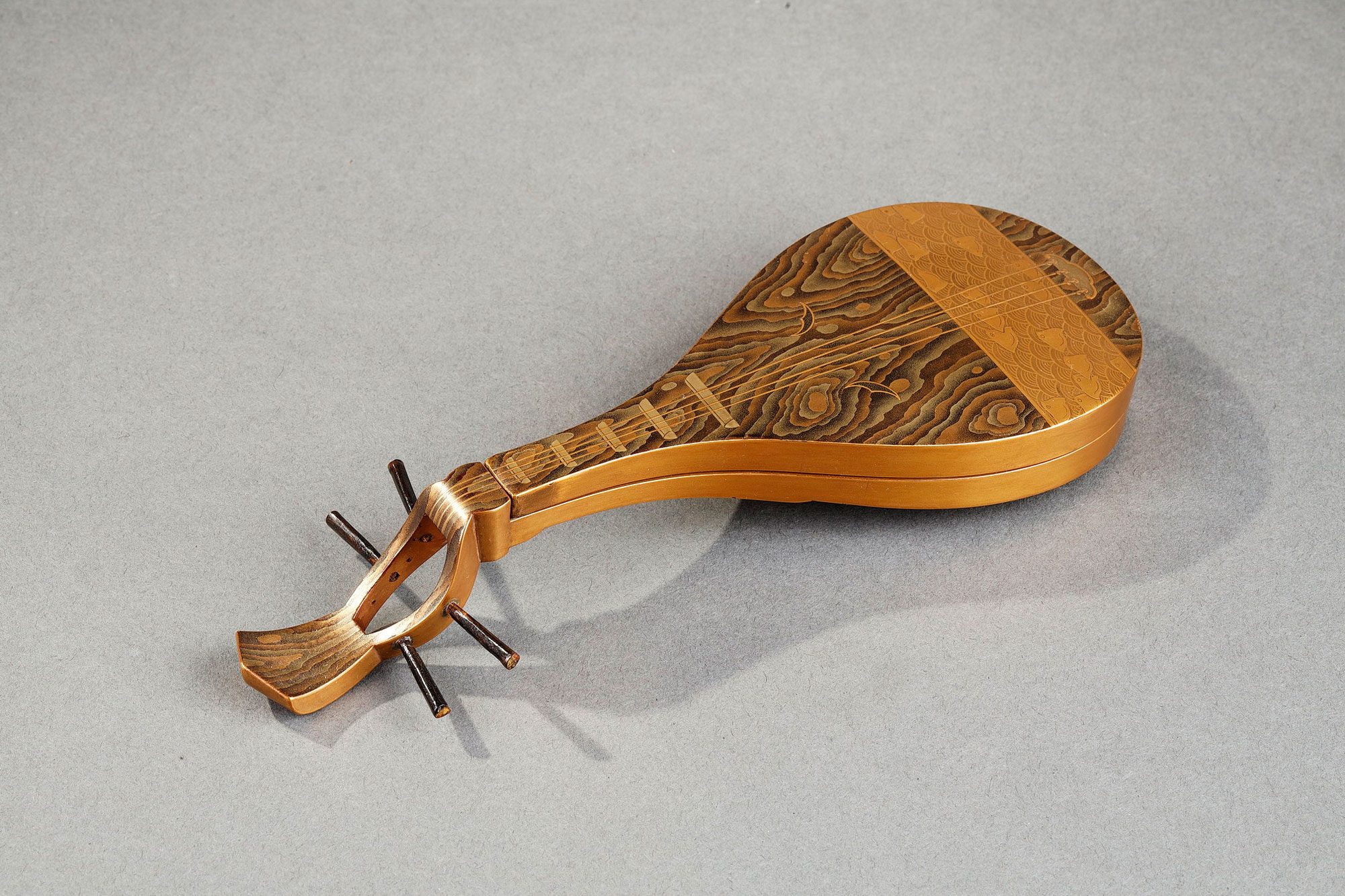
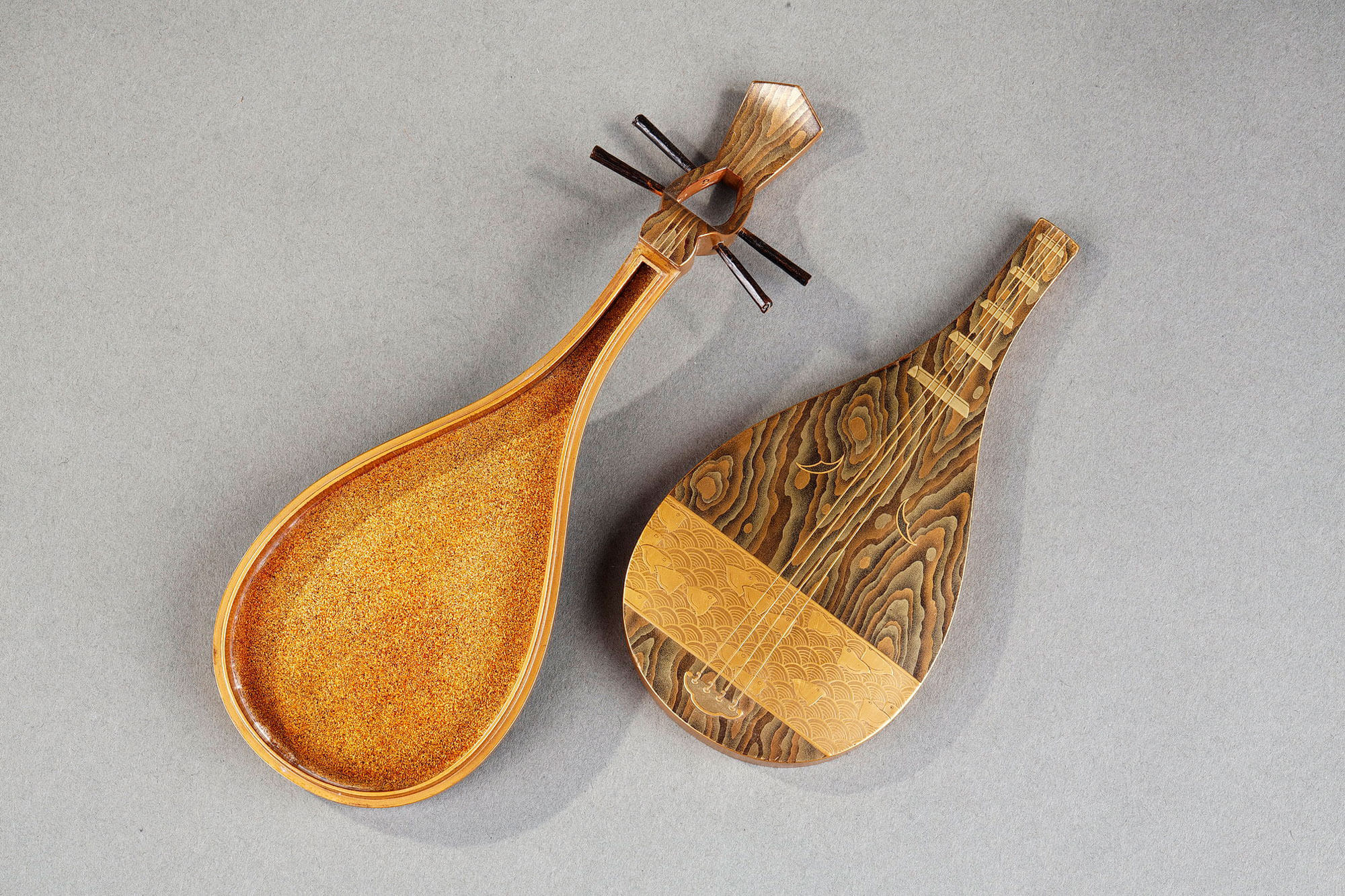
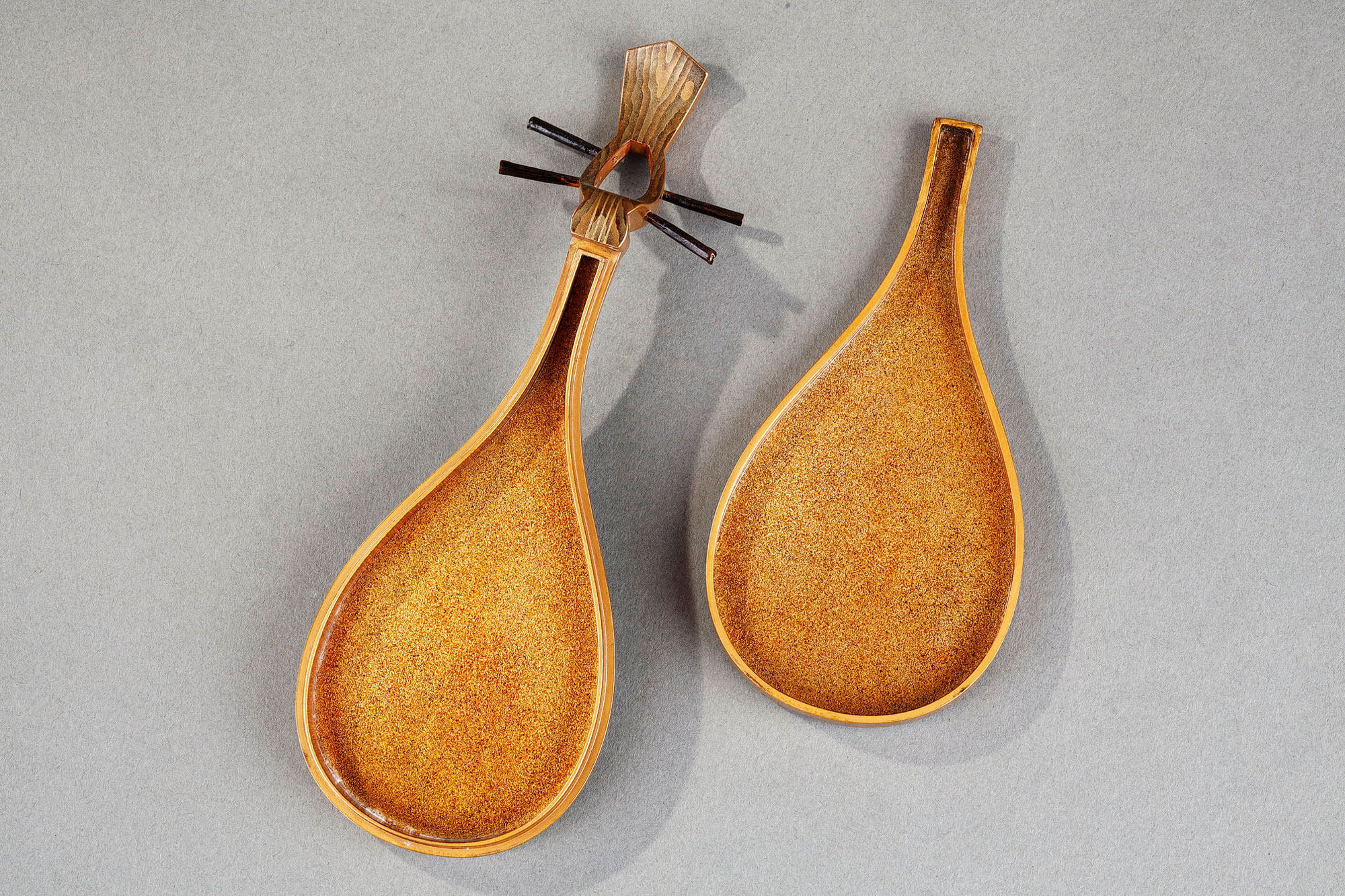
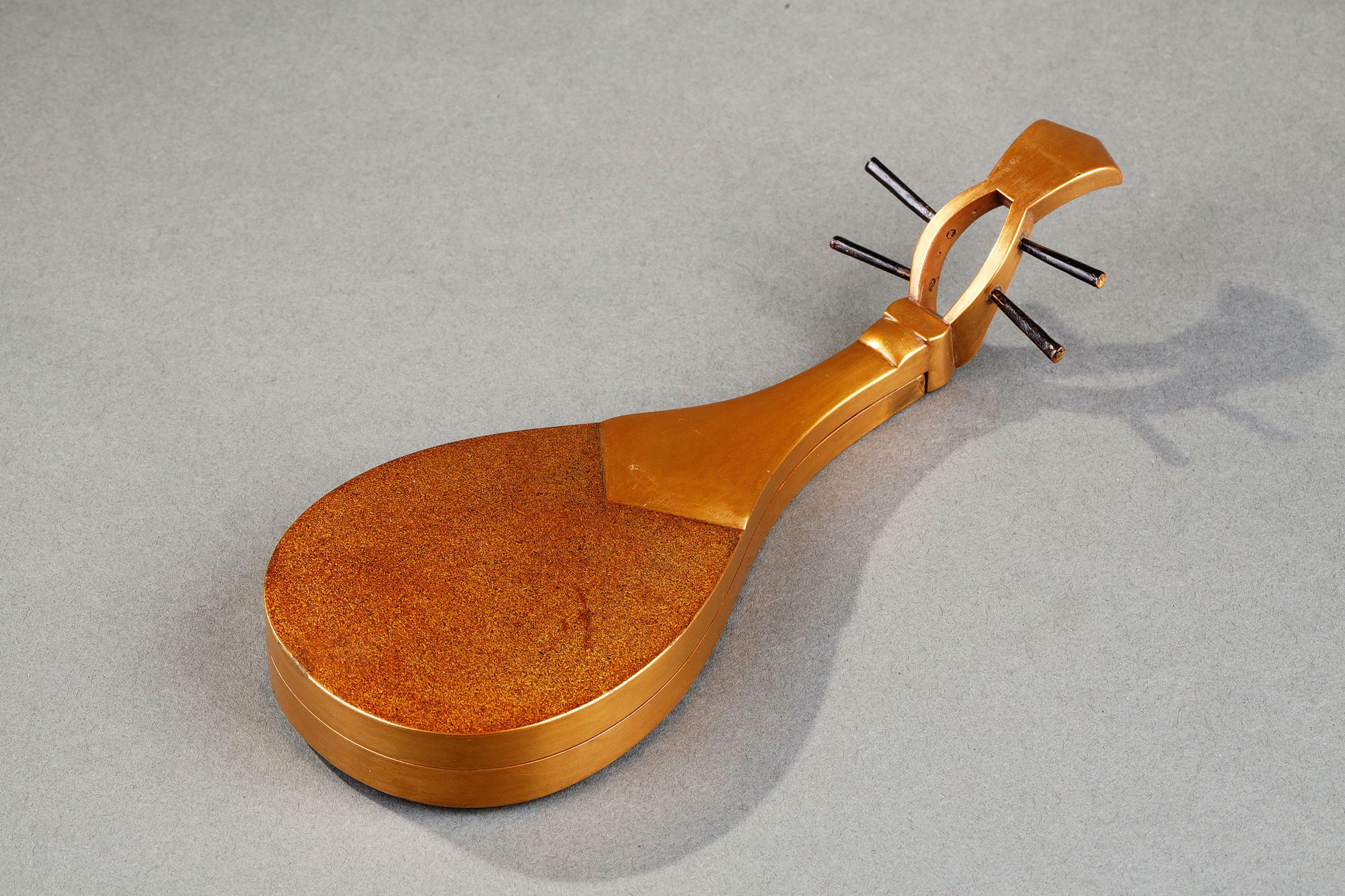
Maki-e gold-lacquered box shaped like a biwa.
This box, delicately shaped like a biwa, features an elegant silhouette reminiscent of the traditional Japanese instrument. The surface decoration features a trompe-l’œil woodgrain effect, with strings also rendered in trompe-l’œil. The surface is also adorned with a band depicting a motif of fish in water executed in gold maki-e, creating a play of textures and reflections on the instrument. The interior and underside of the box are finished in nashi-ji lacquer (aventurine background), while the sides are finished in kin-fundame (gold background). The ensemble showcases precise and decorative lacquer work, combining various traditional techniques.
The biwa holds strong symbolic significance in Japanese culture : it is associated with narrative music and epic tales, particularly those of blind monks who sang war chronicles. Through its form, this box thus evokes the art, poetry and history of classical Japan.
Reference : Monika Kopplin, “The Lacquers of Japan: The Collections of Marie Antoinette,” page 74.
}
?>
Maki-e gold-lacquered box shaped like a biwa
- Lacquer
Discover more Lacquer
Return to the collection
Pair of imperial quadrilobed stands in red lacquered wood imitating faux marble
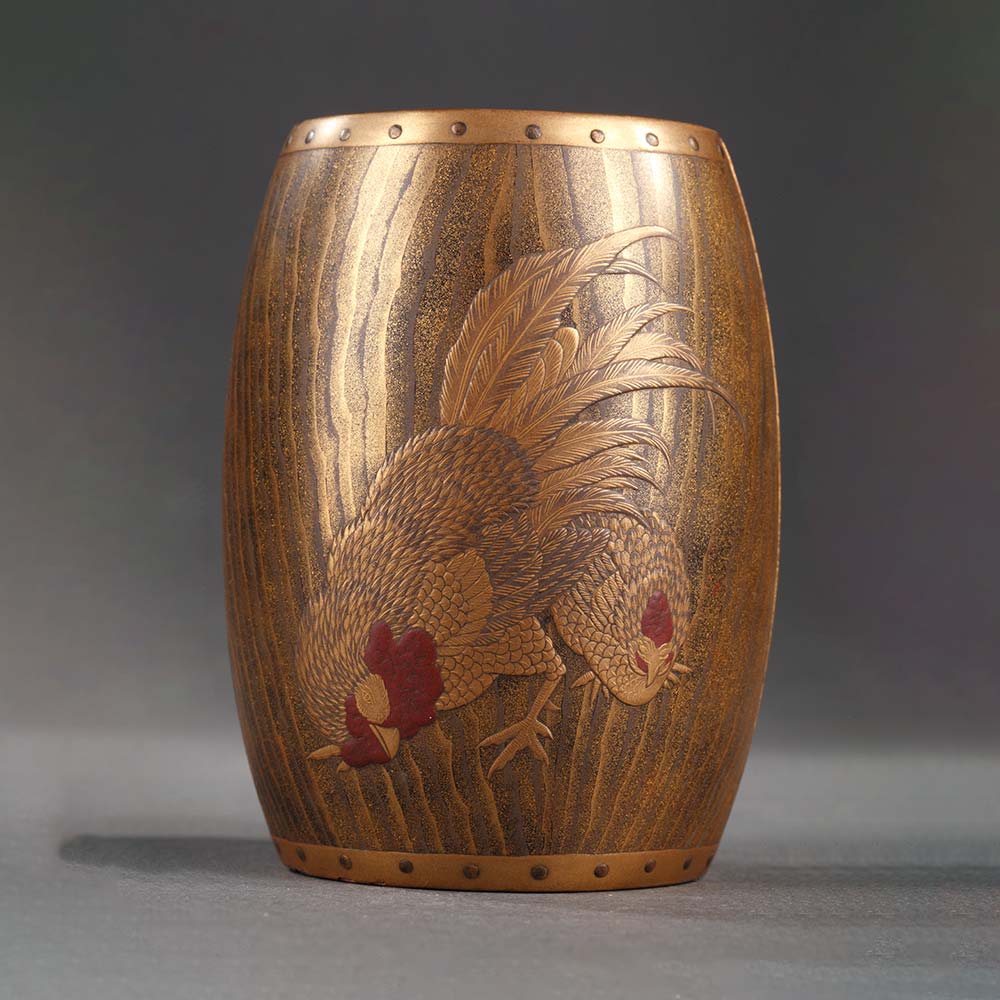
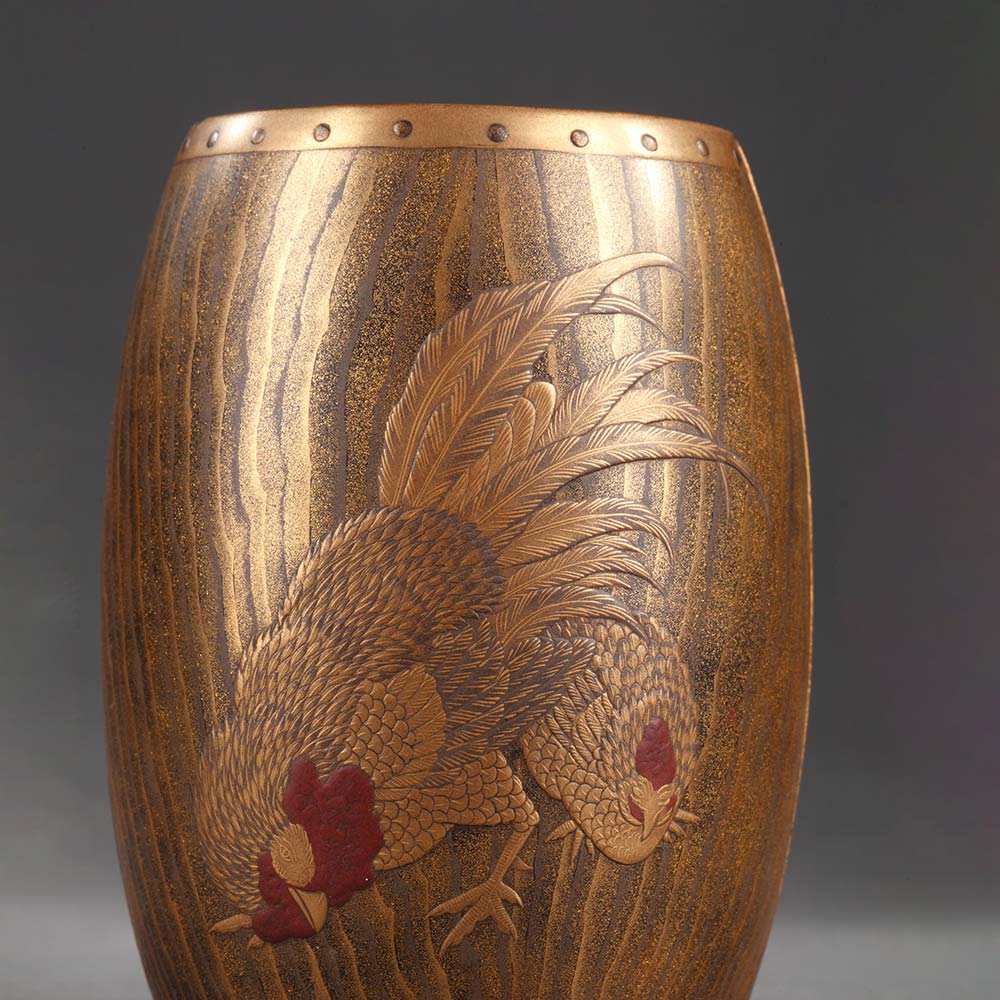
A war drum shaped box decorated with a rooster and a hen
A rare inlaid lacquer panel depicting a blooming magnolia tree
A rare group of four gilt-lacquered buddhas